The Summer Melt Crisis: Why 1 in 5 Accepted Students Never Arrive (And How to Fix It)
For university administrators, the hardest part of the recruitment cycle should be getting a student to say "yes."
You’ve invested heavily in marketing, open days, and counselling hours. The application is in, the offer is sent, and the deposit is paid. In your data system, they are marked as "Enrolled."
But come September, the lecture hall has empty seats.
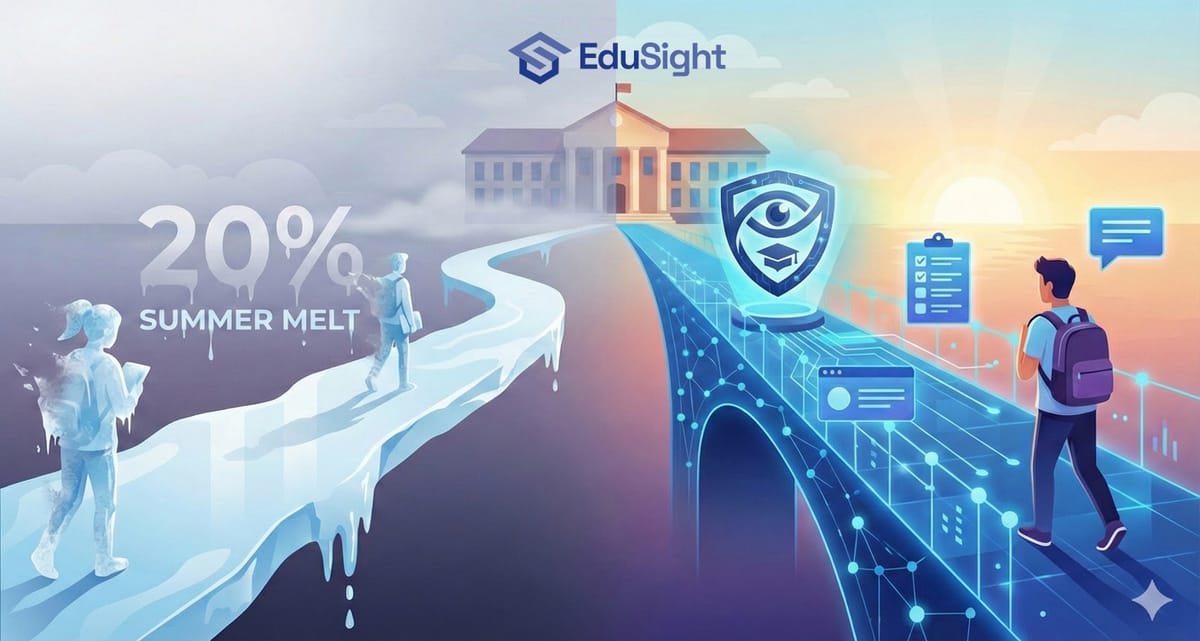
This is Summer Melt—the phenomenon where college-intending students, who have already been accepted and confirmed, fail to matriculate in the fall.
Global data suggests that 10% to 20% of accepted students melt away during the summer months. For first-generation or low-income students, that figure can spike to 40%. In an era of tightening budgets and the looming "enrollment cliff," losing a fifth of your incoming class after you’ve supposedly won them is a leak no institution can afford.
The problem isn’t usually a lack of interest. It’s a lack of support during the critical "black hole" period between acceptance and arrival.
Here is why summer melt happens, and how EduSight.ai transforms this vulnerability into your strongest retention tool.
The Anatomy of Melt: Friction, Not Indifference
Why does a student who worked hard to get in suddenly disappear? Research shows it is rarely a sudden change of heart. Instead, it is a "death by a thousand cuts"—a series of small, administrative, and emotional hurdles that pile up when university support is at its lowest.
- Administrative Friction: Housing forms, visa applications, health insurance mandates, and course registration portals are complex. Without guidance, they become roadblocks.
- Financial Anxiety: Understanding tuition structures or financial aid release dates often requires expert help—help that isn’t available when admissions teams are on summer break.
- Imposter Syndrome: The silence from the university breeds doubt. “Do I really belong there?” “I haven’t heard anything in weeks—did I miss a step?”
When a student hits a roadblock in July, and the only option is to email a general inbox that takes 5 days to reply, they don’t just get frustrated. They give up.
How EduSight Stops the Leak
Traditional admissions teams cannot work 24/7. But the summer melt problem is a 24/7 issue.
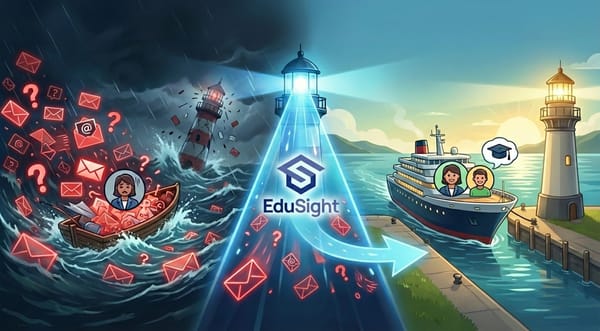
EduSight bridges the gap between acceptance and arrival by replacing static emails with active, intelligent engagement. We don’t just answer questions; we guide the student to the starting line.
1. Conversational Continuity (When Staff Are Sleeping) During Non Office Hours
The anxiety of a student doesn't adhere to business hours. A specific query about visa processing or campus safety might strike at 11 PM on a Saturday.
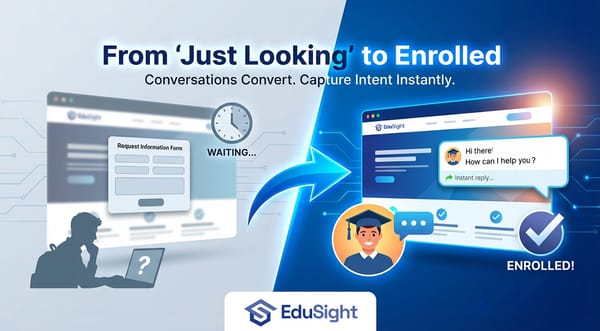
EduSight’s AI-driven conversations provide immediate, accurate answers drawn directly from your university’s knowledge base. Instead of waiting days for a clarification, the student gets instant reassurance.
- The Impact: You maintain momentum. The student feels supported, not ignored, reinforcing their decision to attend.
2. The Power of the Checklist
Cognitive load is a major driver of melt. Students are overwhelmed by what they need to do and when.
EduSight integrates dynamic Student Checklists directly into the engagement interface.
- How it works: Instead of burying requirements in a PDF handbook, the AI proactively nudges the student: "It looks like your housing deposit is due next Friday. Would you like help finding the payment link?"
- The Result: Passive "to-dos" become active conversations. Students can tick off tasks within the flow of chat, giving them a visual sense of progress and reducing the administrative intimidation factor.
3. Guided Journeys: Demystifying Coursework & Data
One of the biggest silent fears for incoming students is academic preparedness. “Will the coursework be too hard? What data do I need to master?”
EduSight’s AI doesn't just handle admin; it handles academic prep.
- Guided Journeys allow students to access preliminary course materials or get AI-assisted explanations on complex data concepts they will face in their first year.
- By engaging with the material before they arrive, students build confidence. They stop seeing themselves as "applicants" and start seeing themselves as "scholars."
4. The Human Safety Net (Helplines)
AI handles the volume, but humans handle the nuance. There will always be complex, sensitive cases—a sudden change in family finances or a mental health concern—that require empathy.
EduSight acts as a triage system. When the AI detects high-stress sentiment or a complex issue it cannot resolve, it seamlessly triggers a Helpline handoff.
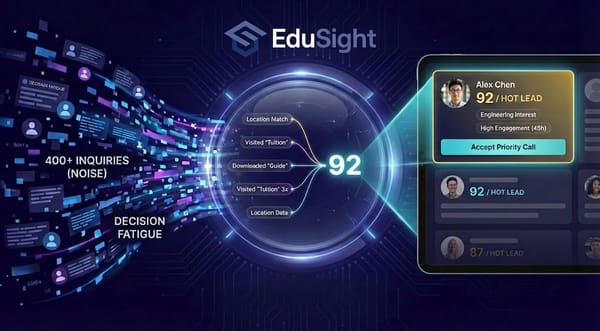
- Efficiency: Your counsellors don’t waste time answering "When does term start?" 500 times. They wake up to a prioritized list of students who genuinely need human intervention to stay enrolled.
The Takeaway: Engagement is the New Enrollment
If you treat enrollment as a transaction that ends with a deposit, you will continue to lose students to the summer melt.
Enrollment is a relationship. And relationships require communication.
By using EduSight to keep students informed, organized, and heard throughout the critical summer months, you do more than just improve your numbers. You ensure that the students who fought to get into your university actually get the chance to walk through your doors.
Is your admissions team ready to close the summer gap?